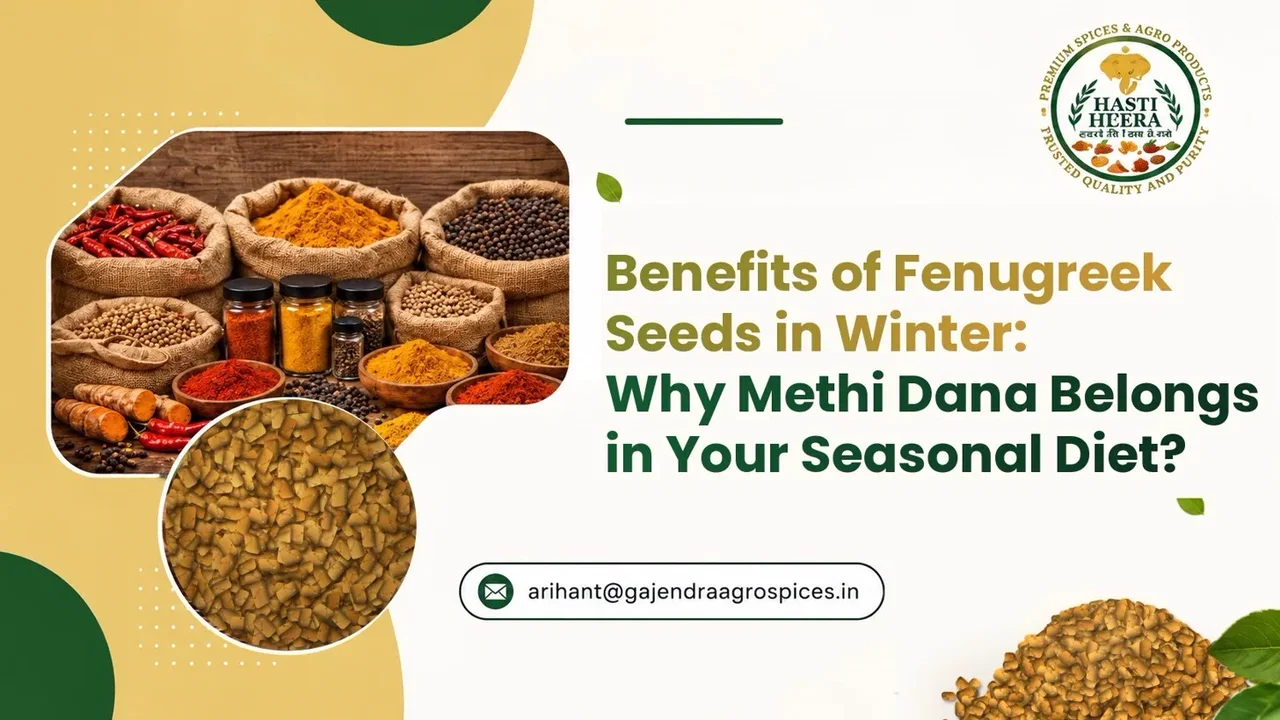
Ask any grandmother about winter food and you will hear about methi. There is the batch of methi laddoos made when the first chill arrives, the slightly bitter methi pak in Gujarati homes, and the spoonful of soaked methi dana swallowed with warm water every morning.
These traditions have stayed alive for good reason. Fenugreek seeds (methi dana) are small, golden-yellow seeds packed with fibre, plant compounds and a bold, slightly bitter flavour that suits the heavier food of the cold months.
This article covers the benefits of fenugreek seeds in winter, what traditional wisdom says, what science says (and doesn't yet say), easy ways to use methi, and who should be careful.
Why Methi Becomes a Winter Favourite?
Winter changes the way we live and eat:
- Heavier meals: more ghee, jaggery, fried snacks and sweets
- Less movement: shorter days and colder mornings
- Stiff joints and low energy: a common winter complaint, especially among older adults
- Slower digestion: often linked to rich food and drinking less water
In traditional Indian kitchens, warming foods like methi, ajwain, ginger, jaggery and sesame were the natural answer. Methi in particular was valued for its role in digestion and for being a nourishing part of winter recipes.
What Makes Fenugreek Seeds Special?
Fenugreek (Trigonella foenum-graecum) belongs to the legume family, the same family as beans and lentils. Its seeds contain:
- Soluble fibre, especially a gel-forming fibre called galactomannan, which swells when soaked
- Plant protein
- Minerals such as iron and magnesium
- Natural compounds like saponins and trigonelline, which give methi its bitterness and aroma
That gel you see when methi seeds are soaked overnight is soluble fibre at work. It is a big part of why methi has long been used for digestive comfort.
7 Benefits of Fenugreek Seeds in Winter
1. Supports Digestion During Heavy-Food Season
Methi's soluble fibre absorbs water and forms a soft gel. This can support regular bowel movements and help ease the sluggish digestion many people feel in winter. Traditionally, a spoonful of soaked methi seeds is taken in the morning for this reason.
2. Adds Fibre to a Season of Rich Food
Winter sweets and snacks tend to be high in sugar and fat but low in fibre. Adding methi seeds to dals, sabzis, theplas and khakhras is a simple way to put some fibre back into your plate.
3. May Help with Blood Sugar Balance (with Caution)
Fenugreek is often discussed for blood sugar. According to the US National Center for Complementary and Integrative Health (NCCIH), some research suggests fenugreek may lower blood sugar in people with type 2 diabetes. However, many of those studies were of low quality, and the evidence is not strong enough to call it a treatment.
The practical takeaway: methi can be part of a healthy, fibre-rich diet, but it is not a replacement for diabetes medicines. If you have diabetes, talk to your doctor before taking large amounts, because combined with medicines, blood sugar may drop too low.
4. A Nourishing Part of Traditional Winter Recipes
Methi laddoo and methi pak are classic winter preparations. They combine fenugreek with jaggery, ghee, dry fruits, gond (edible gum) and whole wheat flour. They are warming and energy-dense, and they are traditionally given to new mothers and older family members in the cold months.
They are also calorie-rich, so enjoy them in small portions, especially if you are watching your weight or blood sugar.
5. Contributes to Your Iron Intake
Fenugreek seeds and leaves contain iron. Methi alone won't fix low iron, but regularly including methi seeds, methi leaves and other iron-rich foods like spinach, jaggery and pulses supports a balanced winter diet.
6. Feels Comforting for Achy Winter Days
In many households, methi laddoos and warm methi preparations are linked with easing winter stiffness and fatigue. This comes from tradition rather than strong clinical proof. The warmth, nourishment and routine of these foods are part of their appeal.
7. Makes Simple Food Flavourful
A little methi goes a long way. When lightly fried in oil, the seeds release a nutty, slightly bitter aroma that lifts kadhi, dal, pickles, potato sabzi and panch phoron tadkas. More flavour from spices often means less need for extra salt or cream.
Easy Ways to Use Fenugreek Seeds This Winter
Soaked Methi Water
- Soak ½ to 1 teaspoon of methi seeds in a glass of water overnight.
- In the morning, drink the water warm or at room temperature.
- You can also chew the softened seeds if you like the taste.
Start with a small amount. Methi can cause gas or loose stools in some people at first.
Methi Laddoo (Light Version)
Roast methi seeds, grind them coarsely, and mix with roasted whole wheat flour, a little ghee, jaggery, chopped nuts and dry ginger powder. Shape into small laddoos and have one a day in winter.
Sprouted Methi
Soak methi seeds overnight, drain, and keep them in a damp cloth for 1–2 days until they sprout. Add the sprouts to salads, sabzis or chilla batter. Sprouting softens the bitterness.
Methi Tadka
Add a pinch of methi seeds to hot oil with mustard and jeera before adding dal, kadhi or vegetables. Don't let them burn, or they will turn too bitter.
Methi Thepla
Add fresh methi leaves, plus a pinch of kasuri methi, to the dough for soft, flavourful winter theplas. They are perfect for breakfast or travel.
How Much Methi Is Safe?
Using methi in normal food amounts is considered safe for most adults and children, according to NCCIH. Larger amounts and supplements are a different matter.
Be careful if:
- You are pregnant: fenugreek in amounts larger than those used in food is not considered safe during pregnancy. Stick to normal cooking amounts and avoid supplements.
- You have diabetes: large amounts may lower blood sugar too much when combined with medicines.
- You take blood-thinning or other regular medicines: ask your doctor before using concentrated methi products.
- You have a legume allergy: people allergic to peanuts or chickpeas may also react to fenugreek.
- You have a sensitive stomach: too much can cause gas, bloating or loose stools.
A harmless but surprising side effect: large amounts of methi can give sweat and urine a maple-syrup-like smell.
How to Choose Good-Quality Fenugreek Seeds
The flavour and benefits of methi depend on clean, fresh seeds. Look for:
- Uniform golden-yellow colour, without dull, dark or mouldy seeds
- Hard, dry seeds with a fresh, characteristic aroma
- Minimal dust, stones, stems or other seeds
- Hygienic, sealed packaging from a trusted, quality-checked source
Storage tip: keep methi seeds in an airtight container in a cool, dry place, away from moisture. Whole seeds keep much longer than ground methi powder.
Frequently Asked Questions
Is it good to eat fenugreek seeds in winter?
Yes. Methi has long been part of Indian winter food, from laddoos and pak to tadkas and theplas. In normal amounts, it adds fibre, flavour and nourishment to seasonal meals.
Should methi seeds be soaked before eating?
Soaking softens the seeds, reduces bitterness and makes them easier to digest. Soaked methi water and sprouted methi are both popular options.
Can I take methi water every day?
Most healthy adults can take a small amount, about ½–1 teaspoon of seeds soaked overnight, daily. If you have diabetes, take regular medicines or are pregnant, check with your doctor first.
Does fenugreek control diabetes?
Some studies suggest methi may help lower blood sugar, but the evidence is not strong enough to call it a treatment. It should never replace prescribed diabetes medicines.
Are methi laddoos healthy?
They are nourishing and warming, but also high in calories from ghee, jaggery and nuts. One small laddoo a day during winter is a sensible portion for most people.
Can pregnant women eat methi?
Methi in normal cooking amounts, such as in dal or sabzi, is generally fine. Supplements and large amounts should be avoided during pregnancy unless a doctor advises otherwise.
What is the difference between methi seeds and kasuri methi?
Methi seeds (methi dana) are the seeds of the fenugreek plant. Kasuri methi is the dried leaves of the same plant, used mainly as a flavouring for curries and breads.
The Bottom Line
Fenugreek seeds are not a miracle cure, but they are a valuable, time-tested winter food. In the heavy-eating season, methi adds fibre for digestion, bold flavour for simple meals, and the comfort of traditional recipes like methi laddoo and methi pak. Use it in sensible amounts, respect the cautions, and let this humble seed earn its place in your winter kitchen.
Bring Home Pure, Aromatic Methi This Winter
Your methi laddoos, tadkas and soaked methi water are only as good as the seeds you start with. Hasti Heera fenugreek seeds are sourced from Rajasthan and processed in Merta. They are cleaned, graded and quality-checked for purity, golden colour and fresh aroma, for home kitchens and bulk buyers alike. Are you a spice brand, wholesaler, food manufacturer or importer? Share your requirement for grades, specifications and bulk pricing for domestic and export orders.