When the first cool mornings arrive, Indian kitchens change. Heavier parathas, hot soups, tangy pickles and warm evening teas return to the menu. One small seed quietly shows up in many of these dishes: dill seed, known as suva in Gujarati and Hindi.
This guide covers the main dill seeds uses in winter, for home cooks and for food businesses. It also explains what bulk buyers should check before ordering.
What Are Dill Seeds?
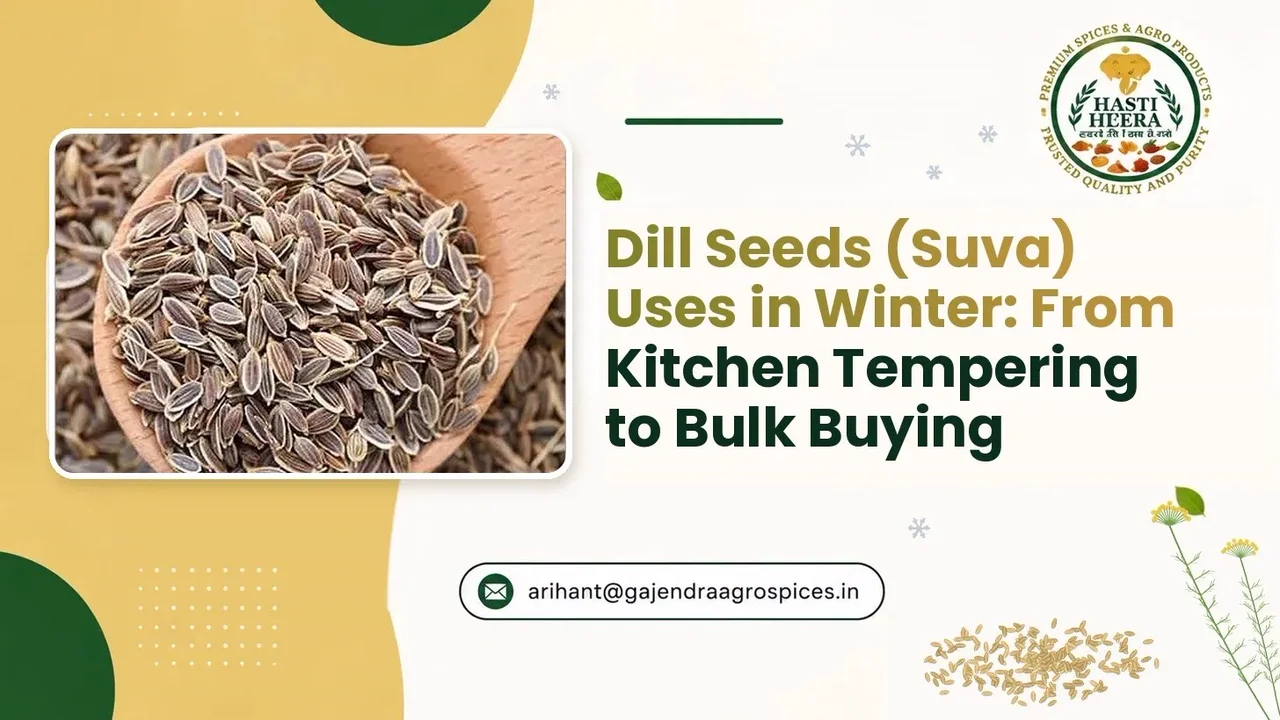
Dill seeds come from Anethum graveolens, a plant in the parsley family (Apiaceae). They are small, flat and light brown to yellowish-brown, with a strong, fresh aroma. The taste is mildly sweet with a slight bitter edge, somewhere between caraway and fennel.
Dill is a cool-season crop. It grows well in the cooler months, which is why suva leaves and seeds feel so natural in winter cooking.
7 Popular Dill Seeds Uses in Winter
1. Tempering (tadka) for winter dals and vegetables
Heat oil or ghee, add a pinch of dill seeds with cumin or mustard, and let them crackle. The aroma lifts moong dal, mixed dal and winter vegetable sabzis. It works especially well with leafy greens, which are plentiful in the cold months.
2. Winter parathas, theplas and rotis
Whole dill seeds can be added to dough along with ajwain, sesame or fenugreek. They give flatbreads a fresh herbal note. A little goes a long way, so start with half a teaspoon per cup of flour.
3. Seasonal pickles and preserved vegetables
Winter is pickling season for carrots, radish, cauliflower and turnip. Dill seeds pair well with mustard seeds, fenugreek and salt in these recipes. Their aroma stays steady through the preserving process, which is why pickle makers like them. If you also stock mustard seeds and fenugreek seeds, you can build a complete pickle masala from one source.
4. Soups and stews
Crush a few seeds lightly and add them to vegetable soup, lentil stew or kadhi. Crushing releases the essential oils, so the flavour spreads through the pot quickly.
5. Warm herbal teas and drinks
Dill seeds are often steeped in hot water with fennel and cumin for a simple, aromatic winter drink. This is a flavour-based use, popular in home kitchens and herbal tea blends. Brands that make blends often choose a clean, consistent dill seed for this reason.
6. Bakery and savory snacks
Cool weather means more baking. Dill seeds add character to breads, crackers, biscuits and savory snacks without overpowering other ingredients. Many small bakeries use them in seeded breads and cheese biscuits.
7. Spice blends and seasonings
Winter demand for ready-to-use masalas rises. Dill seeds blend well with cumin, coriander and fennel in seasoning mixes for snacks, roasted vegetables and ready meals. Ground dill seed is another option for blend makers who want a finer, quicker-mixing ingredient.
Why Winter Is a Good Time to Source Dill Seeds?
Demand and supply both move with the seasons.
- Demand rises. Pickle makers, bakeries, tea blenders and seasoning manufacturers plan their winter runs early.
- Freshness matters. Newly harvested seed usually has a stronger aroma, and aroma is what dill seeds are bought for.
- Planning saves money. Ordering before peak demand gives you time to compare samples, confirm grades and arrange packing, instead of rushing a purchase when stock is tight.
If you run a food business, it helps to finalise your winter requirement before the cold weather settles in.
What Bulk Buyers Should Check Before Ordering?
Not all dill seeds are equal. Before you buy, ask for these details in writing:
| Check | What to look for |
|---|---|
| Purity | Commonly 98% to 99%, depending on your requirement |
| Cleaning type | Machine-clean or Sortex-clean grades |
| Moisture | Around 7% maximum, to avoid clumping and mould |
| Admixture | About 1% maximum |
| Colour | Light brown to yellowish-brown, fairly even |
| Aroma | Strong, fresh and herbal, never musty or flat |
| Shelf life | Typically 12 to 18 months when stored well |
Also ask to see a sample, and confirm packing options such as PP bags, HDPE bags, laminated packs or private-label packs.
Simple Storage Tips for Winter
Cold weather brings its own storage risks, mainly damp air in the morning and evening.
- Keep bags off the floor, on pallets or racks.
- Store in a cool, dry, well-ventilated space away from direct sunlight.
- Keep sealed packs sealed, and close opened bags tightly.
- Don't store dill seeds next to strong-smelling items, as they absorb odours.
- Check regularly for lumps, damp patches or a musty smell.
Good storage protects the aroma, which is the main reason people buy dill seeds in the first place.
Who Buys Dill Seeds, and for What?
| Buyer | Winter use |
|---|---|
| Pickle and preserved-food makers | Flavouring seasonal pickles |
| Bakeries and snack makers | Breads, crackers, savory snacks |
| Spice blenders | Masala and seasoning mixes |
| Herbal tea and beverage brands | Tea blends and drink mixes |
| Retailers and wholesalers | Packed dill seeds for home cooks |
| Exporters | Graded, export-ready lots |
If you want to compare grades and packing, start with a dependable dill seeds supplier in India who shares specifications openly. You can also bundle your order with cumin seeds, fennel seeds or moong to save on freight and paperwork.
Frequently Asked Questions
What are dill seeds used for in winter?
They are mainly used in tempering, flatbreads, winter pickles, soups, herbal teas, bakery items and spice blends.
What is suva called in English?
Suva is dill. The seeds are called dill seeds, and the plant's botanical name is Anethum graveolens.
Are dill seeds the same as fennel seeds?
No. They look somewhat similar and have a related aroma, but dill seeds are flatter and lighter in colour, with a sharper, slightly bitter taste.
How long do dill seeds last?
Stored in a cool, dry, well-ventilated place away from sunlight, dill seeds typically stay good for 12 to 18 months.
Can I buy dill seeds in bulk?
Yes. Buyers can usually order in bulk or consumer packs, and many suppliers offer custom packaging and private-label options.
Final Thought
Dill seeds may be tiny, but their winter uses are wide: tempering, pickling, baking, teas and seasoning blends. For home cooks, a pinch is enough to change a dish. For food businesses, the right grade, a clean sample and clear packing details make the difference between a smooth season and a stressful one.
Ready to Order?
Share your required grade, quantity, packing size and delivery location, and ask for a sample and quote.