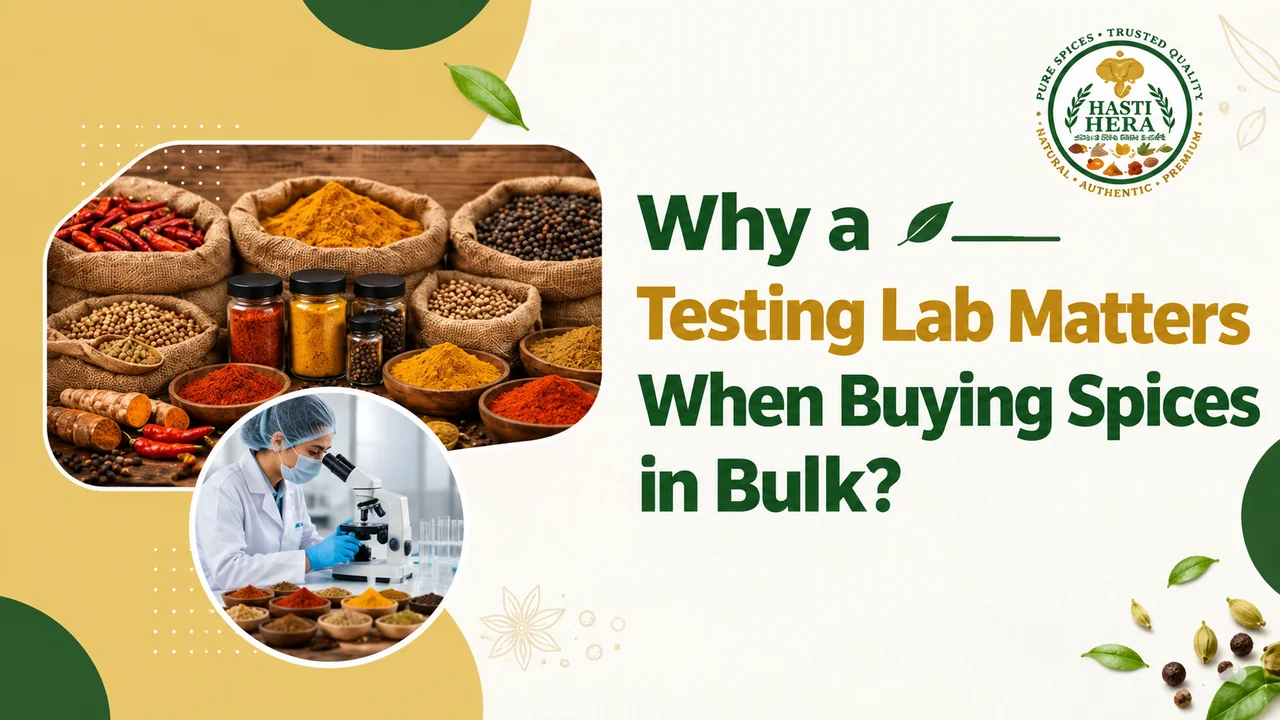
Buying spices in bulk requires more than comparing prices and checking the appearance of the product. For food manufacturers, importers, wholesalers, exporters, and spice brands, product quality directly affects production consistency, customer confidence, and regulatory compliance.
This is why a spice testing lab plays an important role in bulk purchasing. Laboratory testing helps buyers evaluate product specifications, identify certain contaminants, and verify whether a spice meets the quality requirements for its intended use.
Whether you purchase cumin seeds, coriander, turmeric, fennel, or other spices, understanding the importance of quality testing can help you make more informed sourcing decisions.
Why Is Spice Quality Testing Important?
Spices are agricultural products, so their quality can vary according to cultivation, harvesting, drying, storage, transportation, and processing conditions.
A shipment may look clean and have an appealing colour but still require testing to confirm its safety and suitability. Visual inspection alone cannot reliably identify every form of adulteration or contamination.
Spice quality testing helps businesses evaluate important characteristics before accepting a shipment or using the material in production.
1. Identifying Possible Adulteration
Adulteration can affect the purity and commercial value of spices. Depending on the product, it may involve the addition of unauthorised materials, artificial colouring, or cheaper substances.
Laboratory methods can help identify certain adulterants that may not be obvious during routine visual inspection.
For bulk buyers, appropriate testing is particularly important when purchasing ground spices, where differences in appearance can be more difficult to assess.
2. Checking Contaminants and Food Safety
Spices can be exposed to contaminants at different stages of the supply chain. Depending on the spice and its origin, relevant tests may include:
- Pesticide residue analysis
- Heavy metal testing
- Microbiological testing
- Aflatoxin analysis, where applicable
- Moisture content and other product-specific parameters
The appropriate testing panel depends on the product, intended application, destination market, and applicable regulations. Not every test is necessary for every spice shipment.
3. Maintaining Consistent Product Quality
Food manufacturers and spice brands often need consistent colour, aroma, flavour, moisture, and other technical characteristics.
Laboratory reports help buyers compare batches against agreed specifications. This is useful when purchasing regularly because variations in raw materials can affect production, storage, and the quality of finished products.
For example, a food manufacturer sourcing cumin seeds may establish specifications for purity, moisture, and foreign matter before approving a shipment.
Which Tests Should Bulk Spice Buyers Consider?
The right testing process depends on the spice being purchased and the buyer's requirements.
Physical and Chemical Testing
Common checks may include moisture content, foreign matter, ash values, volatile oil content, or other relevant parameters. The exact tests vary by spice and applicable standards.
These checks can help buyers evaluate product specifications and suitability for their intended use.
Microbiological Testing
Microbiological analysis may be required to assess risks associated with organisms such as Salmonella and other relevant microorganisms.
This is especially important for businesses supplying spices to food manufacturers or markets with defined microbiological limits.
Residue and Contaminant Analysis
Testing for pesticide residues, heavy metals, and mycotoxins may be appropriate depending on the product and sourcing conditions.
Exporters and importers should confirm destination-country requirements before shipment rather than relying on a generic certificate.
How Does Laboratory Testing Help Spice Exporters and Importers?
International spice trade involves different documentation, quality specifications, and food safety requirements.
A laboratory report can help buyers assess whether a consignment meets the agreed purchase specifications and applicable requirements. It may also support supplier qualification and shipment approval.
However, a test report is not automatically a guarantee of compliance. Buyers should check the laboratory's competence, the sampling method, the date of testing, and whether the tested sample represents the shipment.
Where appropriate, consider laboratories accredited to ISO/IEC 17025 for the relevant testing methods and scope.
What Should Buyers Check Before Ordering Bulk Spices?
Before confirming a purchase, consider the following checklist:
- Product specifications: Define acceptable limits for moisture, purity, and other relevant parameters.
- Sample approval: Evaluate a representative sample before placing a large order.
- Laboratory reports: Request recent, relevant test reports and verify the batch details.
- Supplier documentation: Review traceability, processing information, and applicable certifications.
- Packaging and storage: Confirm that the product is packed and stored appropriately.
- Shipment inspection: Establish acceptance criteria and procedures for handling quality discrepancies.
These steps can help reduce avoidable sourcing risks and support a more consistent purchasing process.
Choosing a Reliable Bulk Spice Supplier
Laboratory testing is one part of responsible sourcing. Buyers should also evaluate the supplier's experience, product range, quality control procedures, packaging options, and ability to fulfil orders consistently.
Businesses sourcing cumin, fennel, coriander, and other spices can explore the product and sourcing information available from Gajendra Agro Spices.
Before placing an order, discuss your required specifications, order volume, packaging, and documentation directly with the supplier. Buyers with specific food safety or export requirements should also establish their testing criteria in advance.
Frequently Asked Questions
1. Why is a spice testing lab important for bulk buyers?
It helps assess product quality, purity, and selected safety parameters against agreed specifications and applicable standards.
2. Can laboratory testing detect adulterated spices?
Certain laboratory methods can detect specific adulterants. The appropriate method depends on the spice and the suspected adulterant.
3. Which tests are commonly performed on spices?
Testing may cover moisture, foreign matter, microbiological contamination, pesticide residues, heavy metals, and aflatoxins, depending on the product and requirements.
4. Is laboratory testing necessary before every bulk purchase?
Testing needs depend on risk, supplier history, product specifications, and regulatory requirements. Buyers should establish a suitable testing and verification plan.
5. What is a Certificate of Analysis for spices?
A Certificate of Analysis (CoA) records the results of specified tests for a product or batch. Buyers should verify the sample identification, test methods, results, and issuing laboratory.
6. What should spice importers check before shipment?
Importers should confirm product specifications, destination-market requirements, relevant laboratory reports, packaging, traceability, and shipment documentation.
7. Does a laboratory report guarantee that a spice shipment is safe?
No. A report only provides evidence about the sample and parameters tested. Representative sampling, appropriate methods, storage conditions, and supply-chain controls also matter.
Final Thoughts
When buying spices in bulk, quality assurance should be part of the purchasing process, not an afterthought. A suitable spice testing lab can help buyers evaluate product specifications, investigate potential contamination, and make better-informed purchasing decisions.
By combining laboratory verification with supplier assessment, representative sampling, and clear purchase specifications, businesses can build a more reliable spice sourcing process.